
If you’ve ever wanted to encourage your child’s curiosity and creativity but felt overwhelmed by complicated setups, you’re not alone. The truth is, play doesn’t need to be elaborate or time-consuming to be meaningful. In fact, some of the richest learning happens through simple, everyday experiences. Here are 3 simple play ideas you can start today, all using materials you probably already have at home.
1. Building with Everyday Materials
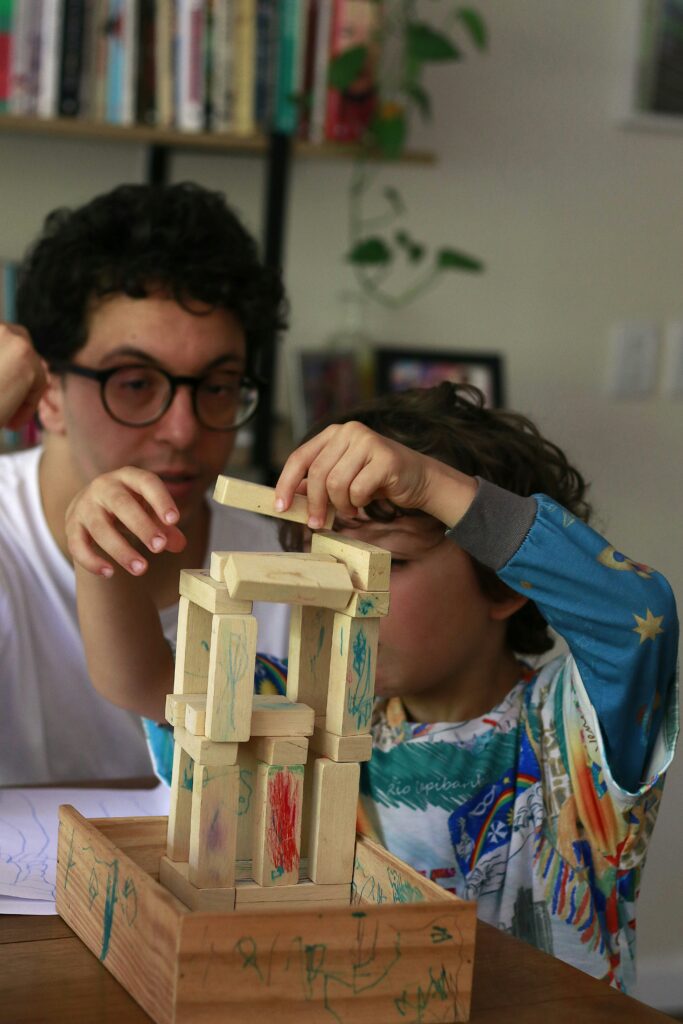
You don’t need a fancy set of blocks to spark creativity. Gather whatever you have on hand: cardboard boxes, paper cups, empty containers, or wooden spoons. Invite your child to build towers, bridges, or entire “cities” using these materials.
This type of play encourages problem-solving and spatial awareness. Your child will experiment with balance, structure, and design—all while having fun. You can even turn it into a cooperative activity: build together or challenge each other to create the tallest tower or a bridge that can hold a small toy.
Tip: Keep the activity open-ended. Don’t give instructions or rules; the magic happens when children lead the play.
2. Loose Parts Exploration
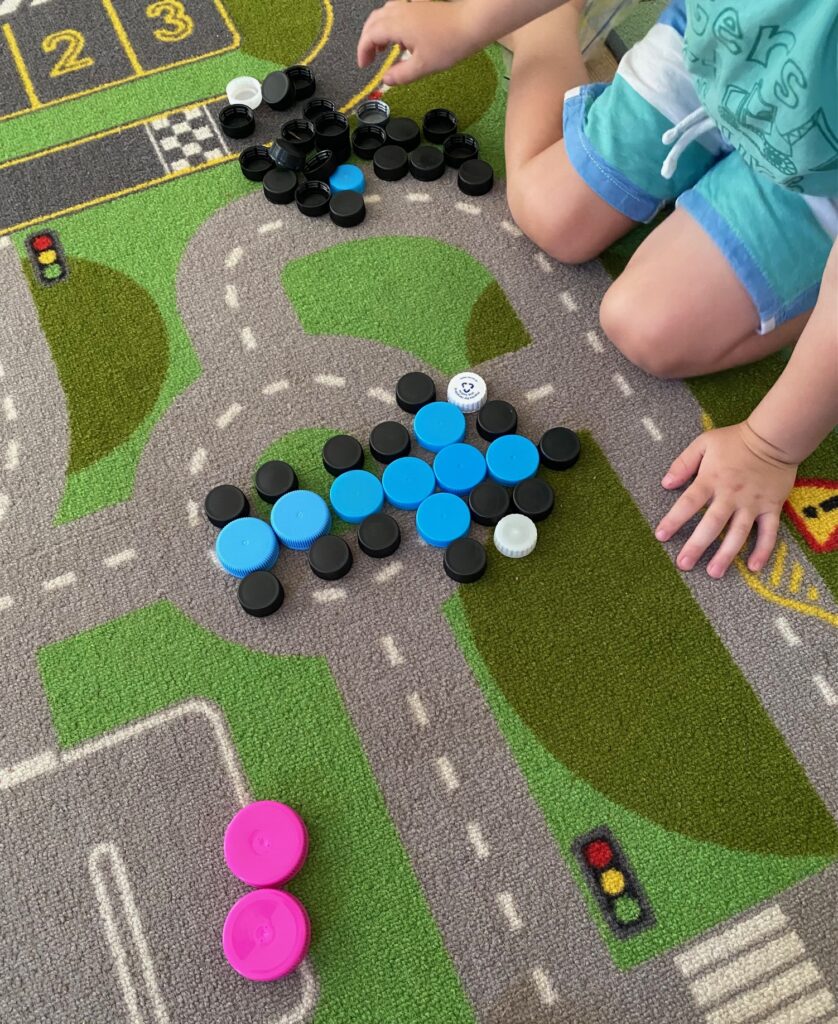
Loose parts are small objects that can be moved, combined, and manipulated in endless ways. Examples include buttons, pebbles, shells, bottle caps, or even pieces of fabric.
Set up a small tray or basket with a variety of these materials and let your child explore. They might sort, stack, or create patterns, or use the objects in imaginative ways you wouldn’t expect. Loose parts play helps children develop fine motor skills, critical thinking, and creativity.
Tip: Rotate the objects regularly. Introducing new textures or colors keeps the play fresh and exciting.
3. Simple Art Invitations
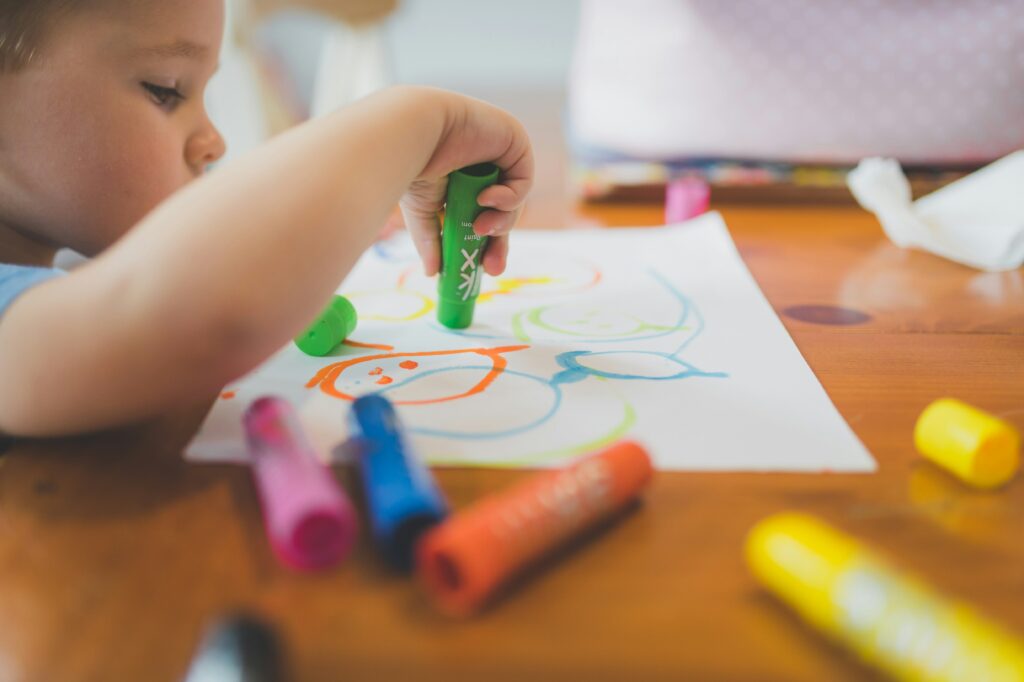
Art doesn’t have to be messy or complicated. Give your child a sheet of paper and some basic supplies—crayons, markers, or paints—and invite them to create. You could add a small twist: “Can you make a picture using only circles?” or “Let’s draw something you see outside today.”
These “art invitations” encourage open-ended creativity while also helping children focus, experiment, and express their ideas visually. Unlike structured crafts, there’s no right or wrong way to do it—the goal is the process, not the product.
Tip: Display their creations somewhere visible. This reinforces that their efforts are valued and celebrated.
Why Simple Play Works
Simple play is powerful because it allows children to lead, explore, and problem-solve naturally. You don’t need fancy toys or complicated instructions. What matters most is providing time, space, and encouragement. When children feel free to experiment and create, they develop confidence, curiosity, and resilience.
Start small. Pick one of these ideas today and see where your child’s imagination takes them. You’ll be amazed at how something simple can turn into a world of learning and fun.
Ready to make play even easier?
Download this free printable with the 3 simple play ideas so you can keep it handy, use it for inspiration, or even post it on the fridge. Perfect for busy days, last-minute play, or as a gentle reminder that play doesn’t have to be perfect—it just has to be possible.
Let me know which one you try and how it goes!
Stace